
Posted by Sharee Gibson
on January 05, 2026

Leaving the house can feel like the hardest 10-minutes of the day because it’s a decision-heavy transition. And too many of those decisions are happening all at once.
What to bring.
What you’ll need.
What you might forget.
What you’re carrying just in case.
All while trying to herd cats into car seats and tell someone for the tenth time to put their shoes on.
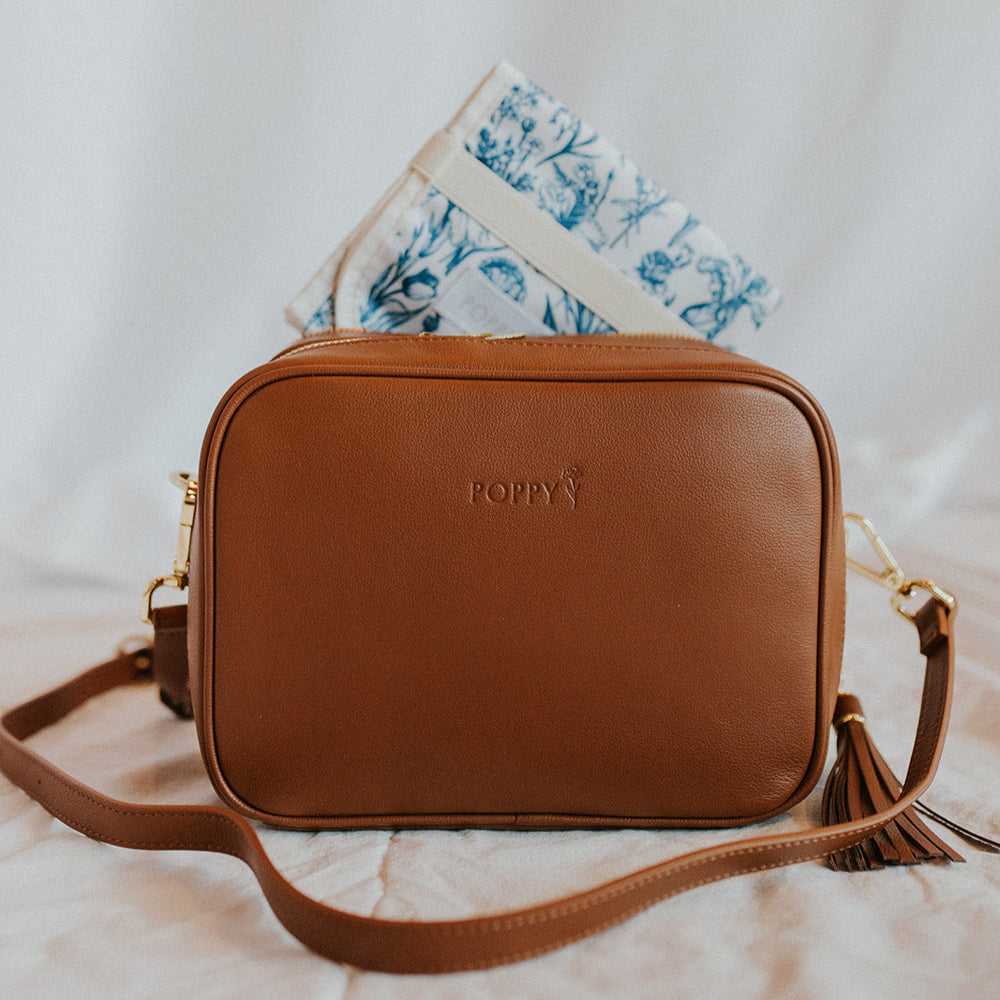
We tend to think of a bag as an accessory — something cute you grab on the way out the door. (Or purely functional and not at all out style, a la giant diaper bag backpack)
But in real life, a mom bag should function as something else entirely.
It’s a decision-support system for life outside the house.
Leaving the House Isn’t Hard – the Decisions Are
The hardest part of leaving the house is the mental load that comes before it.
Every outing quietly asks you to answer a dozen small questions:
Do I need snacks this time?
Where did I put the water bottle?
Is this the bag with my wallet?
What happens if we’re out longer than planned?
Did I grab the backpack with the kids’ snacks and water?
Are there wipes in here?
Are my keys and wallet actually in my purse?
When there’s no system, your brain tries to solve all of this in real time. And you're competent and capable, so of course you do it without a misstep. But it comes at a cost.
That’s why you can feel:
- overpacked, yet unprepared
- rushed, even when you planned ahead
- scattered before you even leave
It’s not a planning problem.
It’s a decision overload problem.
A Bag as a Decision-Support Tool
A true system doesn’t just hold items.
It removes decisions.
When a bag is designed as a decision-support tool, it quietly answers questions for you:
- What always comes with me (and never leaves the bag)
- What changes based on the outing
- Where essentials live
- What doesn’t need to be reconsidered
Instead of asking, “What should I bring?”
The system says, “This is already handled.”
That’s the difference between carrying things and being supported by them.
Why “More Space” Often Makes Things Worse
Most bags promise to solve this with 'more': more pockets, more capacity, more options.
But more options usually mean more decisions.
I first noticed this in college. When I had weeks to write a paper, it took weeks. When I only had a couple days, it still happened. Two weeks expands. Two days focuses. Same result — but a very different amount of mental energy.
Bags work the same way.
We fill whatever space we’re given.
And then we end up carrying more. Not because we need it, but because there’s room.
Without clear structure:
- everything becomes a maybe
- categories blur together
- you carry more “just in case”
- and still feel like something’s missing
A decision-support system works the opposite way.
It creates:
- clear categories
- intentional limits
- consistency from outing to outing
Carrying less isn’t risky when the system is clear.
The limits are freeing.
Organization Is Mental Relief
Organization isn’t about aesthetics or control.
It’s about mental relief.
When:
- items have a consistent home
- essentials don’t move between bags
- the structure stays the same even as life changes
Your brain stops scanning for what might be missing.
You leave the house calmer.
You forget less.
You don’t feel tired before you’ve even started.
That’s not willpower.
That’s good design.
The Real Reframe
If leaving the house feels harder than it should, the problem isn’t you.
It’s that the system supporting that transition hasn’t been designed yet.
A mom bag isn’t just something you carry.
It’s a decision-support system for life on the go.
And when that system works, everything else feels lighter.
👉 Explore the bags designed to support this system
If this way of thinking resonates, you’ll likely find relief in bags designed to reduce decisions for moms.